Have you ever typed cancellation or cancelation and wondered which spelling is correct? You’re not alone. The difference between cancellation vs cancelation confuses many English writers because both spellings exist, but one is much more common.
The good news is that cancellation, with two Ls in the middle, is the standard and widely preferred spelling in both British and American English. Cancelation, with one L in that position, is also recognized, particularly in American English, but it is far less common.
In this guide, you’ll learn the difference between these spellings, why the confusion happens, how to use each word in real sentences, and which version you should choose for professional writing.
Also Read: Honour or Honor: Which Spelling Should You Use?
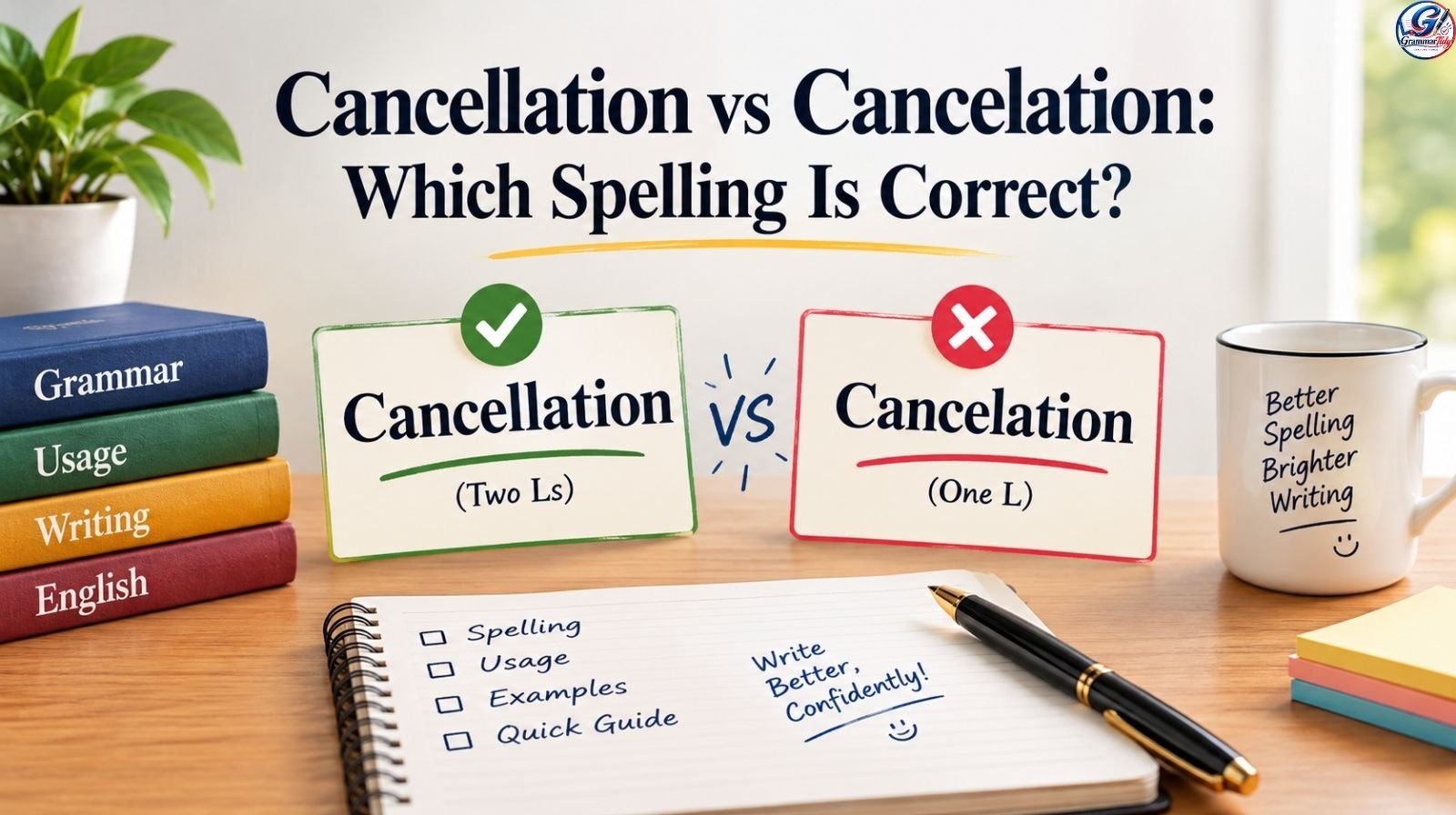
Cancellation vs Cancelation: Which Spelling Is Correct?

Both cancellation and cancelation are recognized English spellings. However, cancellation is the standard choice for almost all everyday writing because it is much more widely used and accepted across English-speaking regions.
The difference is the double L in cancellation. The less common cancelation uses only one L before the ending -ation.
Is Cancellation the Preferred Spelling?
Yes. Cancellation is the spelling you should generally use in emails, business documents, school assignments, blog posts, and formal writing.
Examples:
- The flight cancellation caused several delays.
- Please read our cancellation policy before booking.
- We received a cancellation notice yesterday.
- The event’s cancellation disappointed many fans.
Using cancellation is the safest way to maintain consistency and meet most readers’ expectations.
Is Cancelation Ever Correct?
Yes. Cancelation is a legitimate variant, especially in American English, although it is considerably less common than cancellation.
For example:
- The cancelation of the appointment surprised everyone.
- Our office received a cancelation request.
These sentences are understandable, but most writers and editors would generally choose cancellation instead.
Also Read: 31st or 31th: Which Is Correct? Meaning, Rules & Examples
Quick Comparison of Both Spellings
| Feature | Cancellation | Cancelation |
|---|---|---|
| Spelling | Two Ls in the middle | One L in the middle |
| Accepted English usage | Yes | Yes |
| Frequency | Much more common | Much less common |
| British English | Preferred | Uncommon |
| American English | Preferred | Recognized variant |
| Best choice for general writing | Yes | Usually avoid |
Quick answer: If you are unsure which spelling to use, choose cancellation.
Why Is Cancellation Spelled With Two Ls?
The spelling of cancellation can seem confusing because the related verb follows different conventions in American and British English. For example, American writers often use canceled, while British writers usually use cancelled. However, the noun cancellation normally retains two Ls in both varieties.
The Connection Between Cancel and Cancellation
The word cancellation comes from the verb cancel. When the noun ending -ation is added, the spelling uses a double L.
Compare these related words:
- Cancel → Cancellation
- Cancel → Cancelling (commonly British English)
- Cancel → Canceling (commonly American English)
- Cancel → Cancelled (commonly British English)
- Cancel → Canceled (commonly American English)
The important point is that English spelling does not always follow one consistent pattern across every form of a word. Therefore, you should learn cancellation as a standard spelling in its own right rather than assuming it must match canceled.
Why Do People Write Cancelation Instead?
There are several reasons writers choose cancelation:
- American spelling habits: People may assume that dropping the extra L in canceled means they should also drop it in the noun.
- Typing quickly: Writers sometimes spell a word according to how they think it should look.
- Spell-check differences: Some writing tools may recognize one variant more readily than another.
- Visual confusion: Both forms look reasonable at first glance, especially to someone who has not studied the spelling difference.
For example, someone might write, “Your cancelation request has been approved.” Although the meaning is clear, cancellation request is the more conventional wording.
Also Read: Claritin or Allegra: Which One Is Better For Allergies?
Cancellation vs Cancelation in American and British English
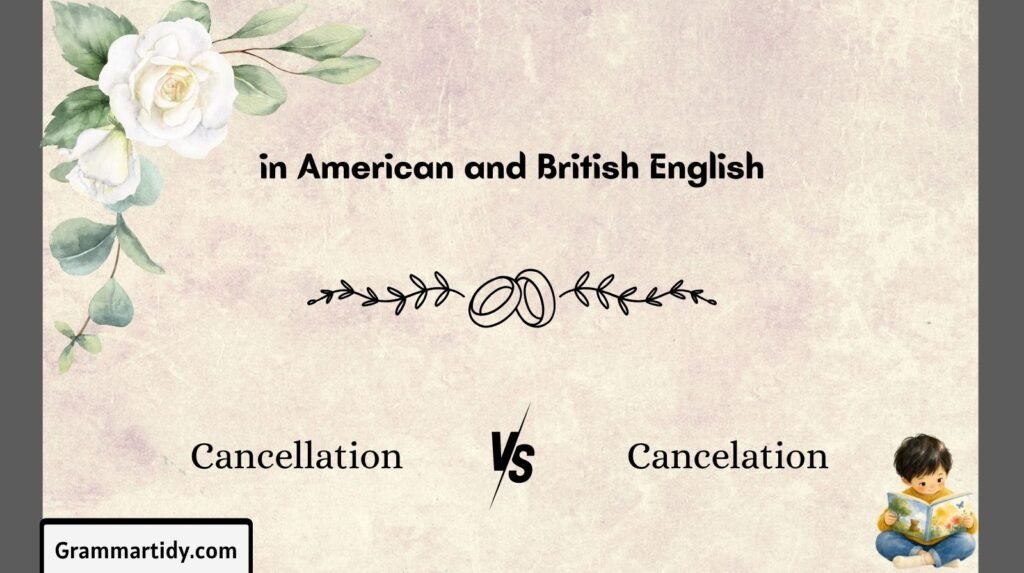
One common misconception is that cancelation is exclusively American and cancellation is exclusively British. The reality is more nuanced: both forms are recognized, but cancellation is the established, widely preferred noun in both varieties.
American English Spelling
American English often simplifies certain spellings, including canceled and canceling. Nevertheless, cancellation remains the usual choice.
Examples:
- The airline announced the cancellation of the flight.
- I requested the cancellation of my subscription.
- The cancellation fee is $25.
- We received confirmation of the cancellation.
Even in American business writing, using cancellation is a reliable choice.
British English Spelling
British English generally uses cancelled and cancelling, but the noun is still usually spelled cancellation.
Examples:
- The train cancellation affected hundreds of passengers.
- The hotel confirmed the cancellation of our booking.
- The cancellation policy applies to all reservations.
- The concert’s cancellation disappointed local fans.
Which Version Should International Writers Use?
If you write for an international audience, choose cancellation. It is familiar to readers in the United States, the United Kingdom, Canada, Australia, and other English-speaking markets.
Consistency is especially important when writing website policies, customer service emails, academic assignments, or business documents. If your organization has a style guide, follow it throughout your content.
Also Read: With or Without You Lyrics: Meaning, Song Details And More
Real-Life Case Study: Choosing the Correct Spelling in a Business Email
Imagine a small online travel agency preparing an email to inform customers that a scheduled tour will no longer take place. The team drafts the following message:
“Due to unexpected circumstances, we regret to inform you about the cancelation of your booking. Please contact our support team if you have any questions.”
The message communicates the essential information, but the spelling of cancelation may look unfamiliar to some customers. The agency wants its communication to appear professional, consistent, and easy to read.
Identifying the Problem
During proofreading, an editor notices the single-L spelling. Rather than treating it as an entirely invalid word, the editor checks a reputable dictionary and confirms that cancellation is the more widely established form.
The editor also checks the rest of the email for consistency, including the booking reference, refund instructions, and customer support details.
Improving the Email
The revised version reads:
“Due to unexpected circumstances, we regret to inform you about the cancellation of your booking. Please contact our support team if you have any questions.”
The editor has made a small change without altering the meaning or tone of the message.
What Can Writers Learn From This Example?
This hypothetical business example illustrates why spelling choices matter in professional communication. A single spelling variation is unlikely to determine whether a customer trusts a company, but consistent writing helps make messages appear polished and easier to understand.
The lesson is practical: when a word has multiple accepted spellings, choose the version most widely recognized by your intended audience. For cancellation vs cancelation, that generally means choosing cancellation.
The example also highlights an important editing habit: verify uncertain words with a reputable dictionary instead of relying entirely on intuition or automatic spell-checking.
Cancellation vs Cancelation: Usage Data and Dictionary Evidence in 2025–2026
When deciding between two spellings, dictionary evidence and reliable usage data are more helpful than guesses about which version looks right.
What Do Dictionaries Say?
Standard English dictionaries support the following conclusions:
- Cancellation is the main and widely preferred spelling.
- Cancelation is recognized as a less common variant, particularly in American English.
- American and British English commonly differ in related verb forms, such as canceled and cancelled, but both generally use cancellation.
Together, these conventions help explain why cancellation remains the safest general-purpose spelling.
Are There Exact Statistics for 2025–2026?
As of October 2026, there is no verified statistic available here giving the exact percentage of writers who use cancellation compared with cancelation. It would be misleading to invent a percentage or present an unverified search count as a fact.
However, established dictionary usage supports the conclusion that cancellation is the main, widely used form and that cancelation is a less common alternative.
Writers who want to investigate spelling popularity can compare historical text collections or examine search-interest trends. However, search interest measures what people look for, not necessarily how frequently a spelling appears in published writing.
Key takeaway: The evidence supports using cancellation in 2026, but a precise current-year percentage should not be claimed without a verified dataset.
Also Read: When Does Trick-or-Treating Start? Halloween Hours Guide
How to Remember the Correct Spelling of Cancellation
The easiest way to avoid confusion is to memorize the noun’s standard spelling and check it whenever you are unsure.
Use the Double-L Memory Trick
Remember this simple phrase:
“Cancel the plan, but cancellation keeps two Ls.”
The phrase reminds you that the noun does not necessarily follow the same spelling pattern as the American past-tense verb canceled.
For example:
- Preferred: The cancellation was unexpected.
- Less common variant: The cancelation was unexpected.
Check Common Phrases
Learning the word in familiar expressions makes it easier to spell correctly.
| Common phrase | Example |
|---|---|
| Cancellation policy | Read our cancellation policy before booking. |
| Cancellation fee | The cancellation fee is nonrefundable. |
| Flight cancellation | The flight cancellation caused delays. |
| Order cancellation | We received your order cancellation request. |
| Event cancellation | Heavy rain led to the event cancellation. |
| Subscription cancellation | You will receive an email confirming your subscription cancellation. |
Notice that cancellation retains two Ls in every example.
Follow This Simple Spelling Checklist
Before submitting an email, article, or assignment, ask yourself:
- Am I using the noun cancellation?
- Have I included both Ls?
- Have I checked the spelling of related forms separately?
- Is my spelling consistent throughout the document?
- Have I followed my organization’s preferred style guide?
These quick checks can prevent avoidable spelling inconsistencies in both casual and professional writing.
Also Read: Winter Spring Summer or Fall: Meaning, Movie, And Season Order
Frequently Asked Questions
1. Is Cancellation or Cancelation Correct?
Both are recognized spellings, but cancellation is much more common and widely preferred. Use it for everyday, academic, and professional writing.
2. Is Cancelation Wrong in American English?
Not entirely. Cancelation is recognized as an American English variant, but it is much less common than cancellation. Most writers should choose the double-L version.
3. Why Does Cancellation Have Two Ls When Canceled Has One?
American English commonly uses canceled and canceling, but the noun retains the traditional double-L spelling cancellation. English spelling conventions do not always apply uniformly to every related word form.
4. Is Cancellation British or American English?
It is standard in both British and American English. Although the verb forms differ between the varieties, cancellation is the preferred noun in both.
5. How Do You Spell Cancellation Fee?
The standard spelling is cancellation fee. For example, “Please check whether a cancellation fee applies before changing your reservation.”
6. What Is the Plural of Cancellation?
The plural is cancellations. For example, “The airline announced several flight cancellations because of severe weather.”
7. Should I Use Cancellation or Cancelation in Formal Writing?
Use cancellation. It is the more widely accepted and familiar spelling, making it the safest option for formal letters, reports, business emails, and published articles.
Conclusion:
When comparing cancellation vs cancelation, the answer is straightforward: both spellings are recognized, but cancellation, with two Ls, is the standard and widely preferred spelling in both American and British English.
Although cancelation appears as a less common American variant, using cancellation helps you maintain consistency in professional emails, academic assignments, website content, booking policies, and everyday writing.
Remember the simple rule: cancel can become canceled in American English, but the noun is generally spelled cancellation.
Ready to improve your English spelling? Save this guide, use the double-L memory trick, and check a trusted dictionary whenever a spelling leaves you uncertain. Small improvements like these can make your writing clearer, more confident, and more professional.
Discover More Article
- Nosey or Nosy: Which Spelling Is Correct?
- Natzi or Nazi: The Correct Spelling, Meaning, And Why It Matters
- Goodmorning or Good Morning: The Correct Usage (And Why It Actually Matters)
- Bougie vs Boujee: The Real Difference Most People Miss
Keep learning with more easy grammar lessons on GrammarTidy.com

Hi, I’m Noor Fatima, the author and creator of Grammar Tidy. I’m passionate about grammar, writing, and making language learning simple and enjoyable. Through Grammar Tidy, I share helpful tips, clear explanations, and practical guidance to help readers improve their writing, avoid common mistakes, and communicate with confidence. My goal is to make better grammar easy, useful, and accessible for everyone.