Have you ever wondered whether to write puting or putting? This small spelling mistake can make a noticeable difference in your writing, especially in school assignments, professional emails, and everyday messages. If you are unsure which version is correct, you are not alone.
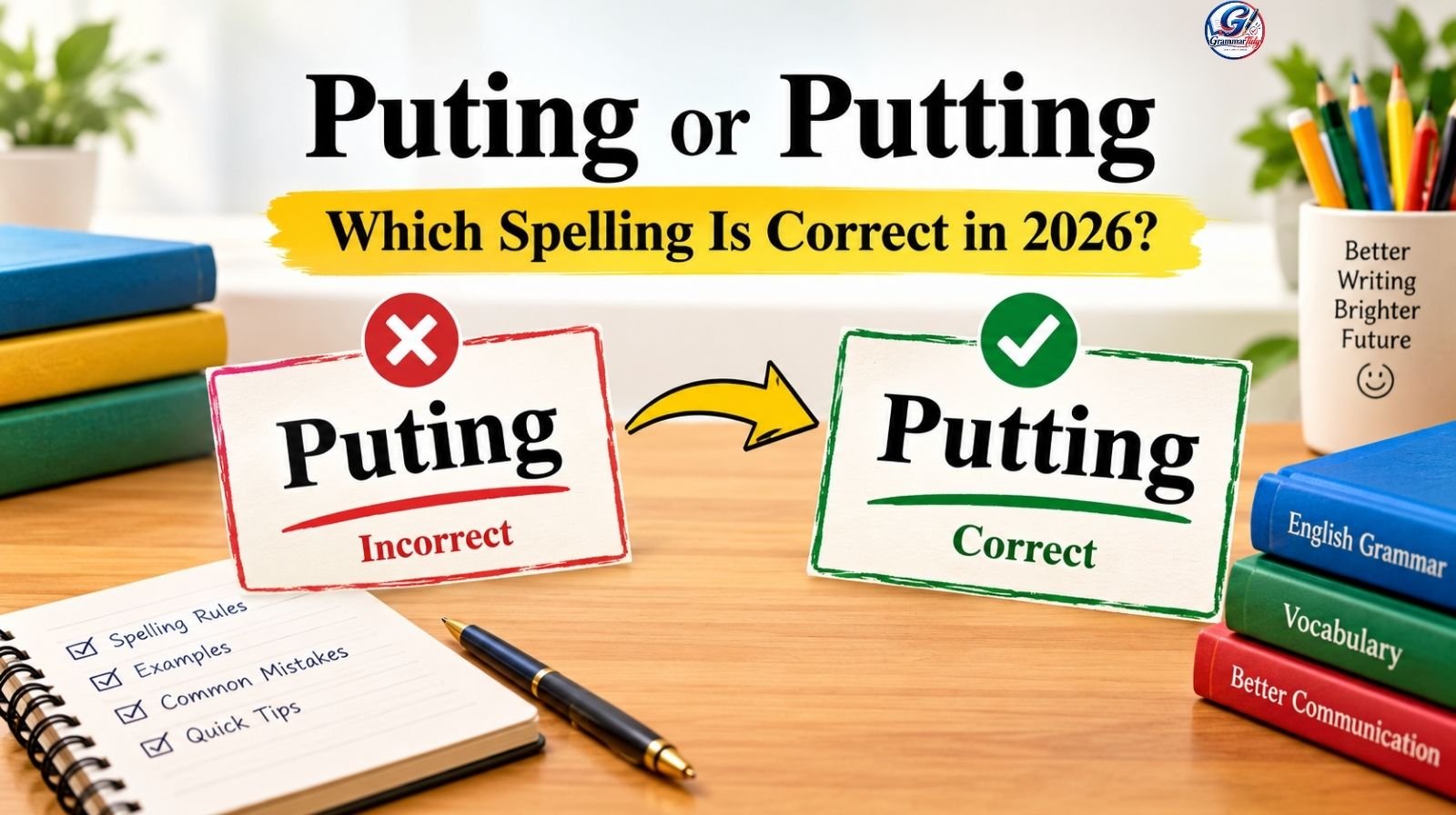
The correct spelling is putting, with two t’s. The word puting is a common misspelling in standard English. Putting is the present participle of the verb put, and it can describe placing something somewhere or taking an action, such as putting a book on a table or putting an idea into practice.
In this guide, you will learn why putting is correct, understand the spelling rule behind it, explore practical examples, and discover easy ways to avoid this mistake in 2026.
Also Read: Quantify vs Qualify: Differences And Correct Usage
What Is the Correct Spelling: Puting or Putting?
The correct spelling is putting. You should use two t’s whenever you write the present participle or gerund of the verb put.
The spelling puting is incorrect in standard English because it does not follow the established spelling pattern for this verb form.
Why Is Putting Correct?
The word putting comes from the verb put. When you add the ending -ing to put, you double the final consonant t.
The correct formation is:
- Put + ing = Putting
- Not: Put + ing = Puting
For example:
- Correct: She is putting her phone on the desk.
- Incorrect: She is puting her phone on the desk.
The extra t is necessary to form the word correctly.
What Does Putting Mean?
Putting can function as a present participle or a gerund, depending on how it is used in a sentence.
As a present participle, it commonly describes an action that is happening.
Example: He is putting the groceries away.
As a gerund, it functions as a noun.
Example: Putting things in order helps me concentrate.
In golf, putting also refers to the action of hitting a golf ball gently toward the hole on the green.
Example: Her putting improved after several practice sessions.
Also Read: Submission vs Submittion: Learn The Difference
Why Does Putting Have Two T’s?
The spelling rule behind putting is known as the consonant-doubling rule. In many English words, when a short, one-syllable verb ends in a single consonant, you double that consonant before adding -ing.
The verb put follows this rule.
The Consonant-Doubling Rule Explained
Consider these common examples:
| Base verb | Correct -ing form |
|---|---|
| Put | Putting |
| Sit | Sitting |
| Run | Running |
| Get | Getting |
| Stop | Stopping |
| Plan | Planning |
These verbs have a short vowel sound followed by a final consonant. Doubling the final consonant helps preserve the intended pronunciation and follows standard English spelling conventions.
However, not every verb follows the same pattern. For example, read becomes reading, and play becomes playing without doubling the final letter.
Also Read: Vinal vs Vinyl: Which Is The Correct One To Use?
Putting vs. Puting: A Quick Comparison
| Feature | Putting | Puting |
|---|---|---|
| Spelling status | Correct | Incorrect in standard English |
| Number of t’s | Two | One |
| Grammar | Present participle or gerund | Not the standard form |
| Example | She is putting on her coat. | She is puting on her coat. |
| Recommended use | Yes | No |
Quick answer: Always write putting when you mean the -ing form of put.
Common Mistakes to Avoid
Writers sometimes leave out the second t because they assume that adding -ing is as simple as attaching the suffix to the base verb.
Avoid these mistakes:
- Writing puting instead of putting.
- Assuming that every verb forms its -ing version in the same way.
- Forgetting to double the final consonant in verbs such as sitting and stopping.
A simple proofreading check can help you catch these errors before publishing or submitting your work.
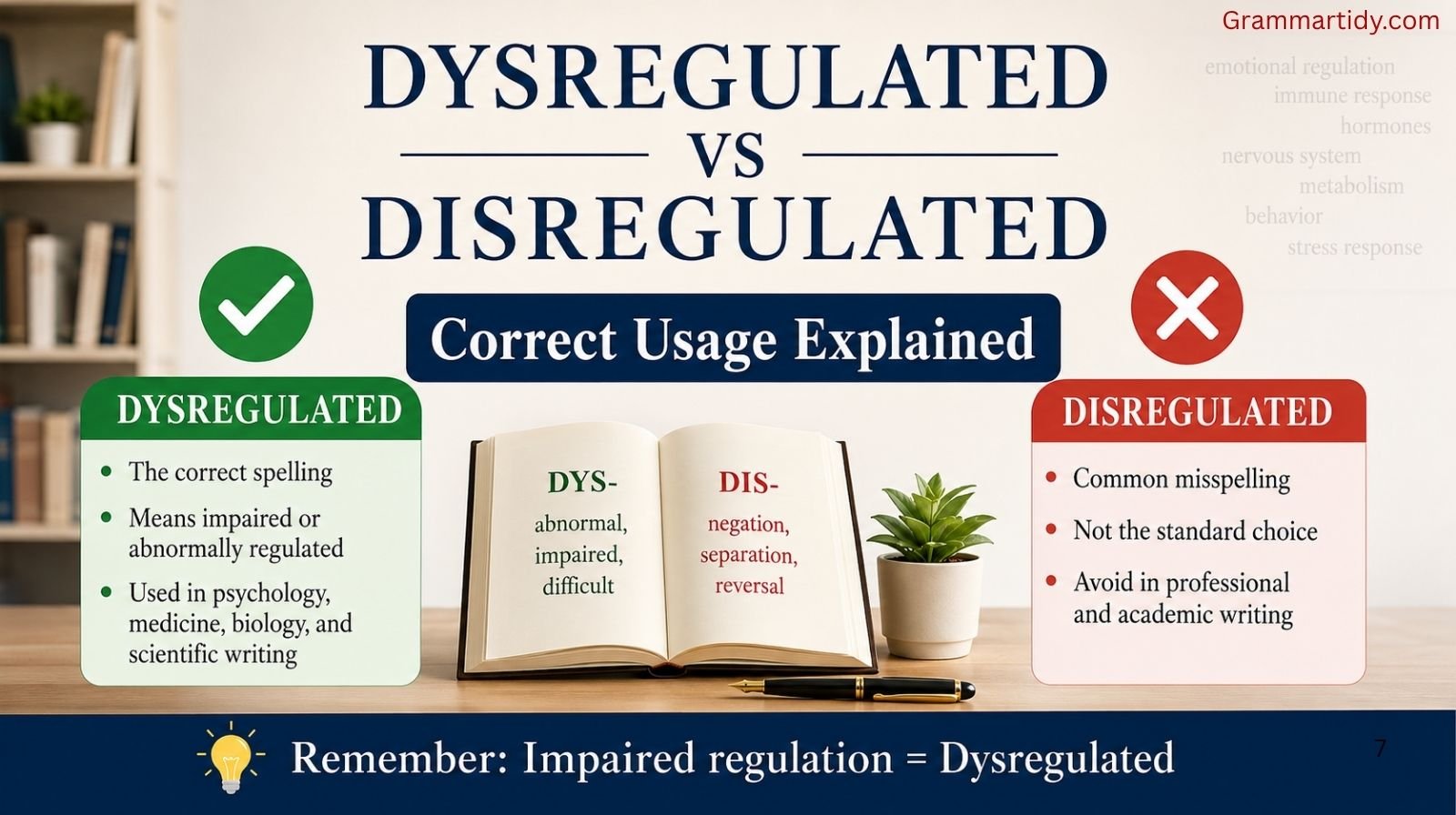
Also Read: Dysregulated vs Disregulated: Correct Usage Explained
How to Use Putting Correctly in Sentences
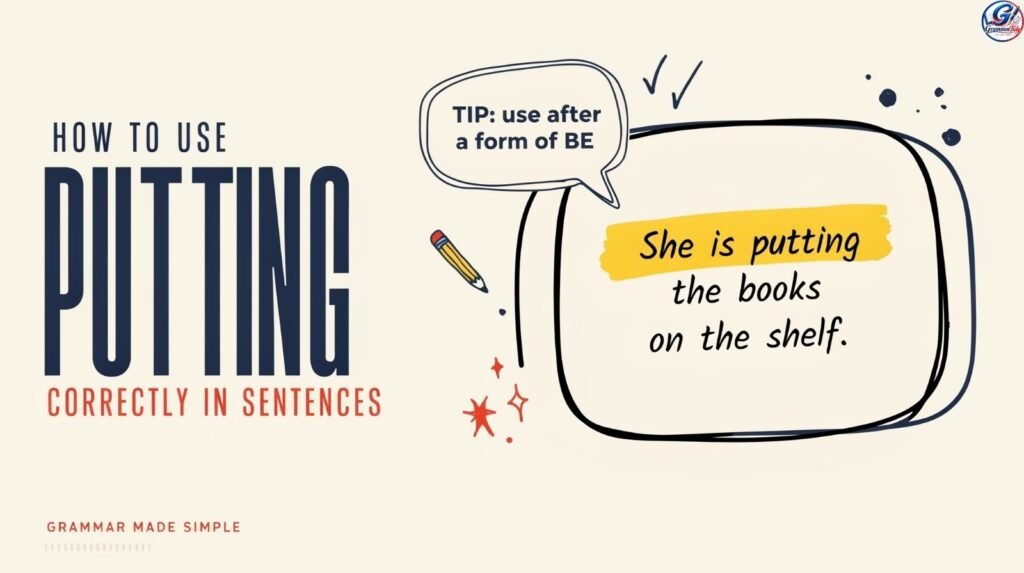
Understanding a spelling rule is useful, but seeing the word in context makes it easier to remember. Putting appears in conversations, academic writing, workplace communication, and everyday descriptions.
Everyday Examples of Putting
Here are some natural sentences showing the correct spelling:
- I am putting my keys in the drawer.
- She is putting fresh flowers in a vase.
- They are putting the chairs around the table.
- He keeps putting off his homework.
- We are putting our plans into action.
- The teacher is putting the books on the shelf.
- I enjoy putting puzzles together.
- She is putting extra effort into her studies.
Notice that putting can refer to physically placing something somewhere or taking an action.
Putting in Professional and Academic Writing
The word also appears frequently in formal and professional contexts.
Examples:
- The company is putting new safety procedures into effect.
- The researcher is putting the results into a clear report.
- The team is putting together a detailed project proposal.
- The school is putting additional learning resources in place.
In each sentence, putting is spelled with two t’s. Using the correct spelling helps your writing look polished and professional.
Putting in Common Expressions
Some familiar expressions also use putting:
- Putting it simply: Explaining something in an easy way.
- Putting effort into something: Working hard to achieve a goal.
- Putting things off: Delaying tasks or responsibilities.
- Putting someone at ease: Helping someone feel comfortable.
- Putting an idea into practice: Turning an idea into action.
Learning these expressions helps you understand how the word works in different situations.
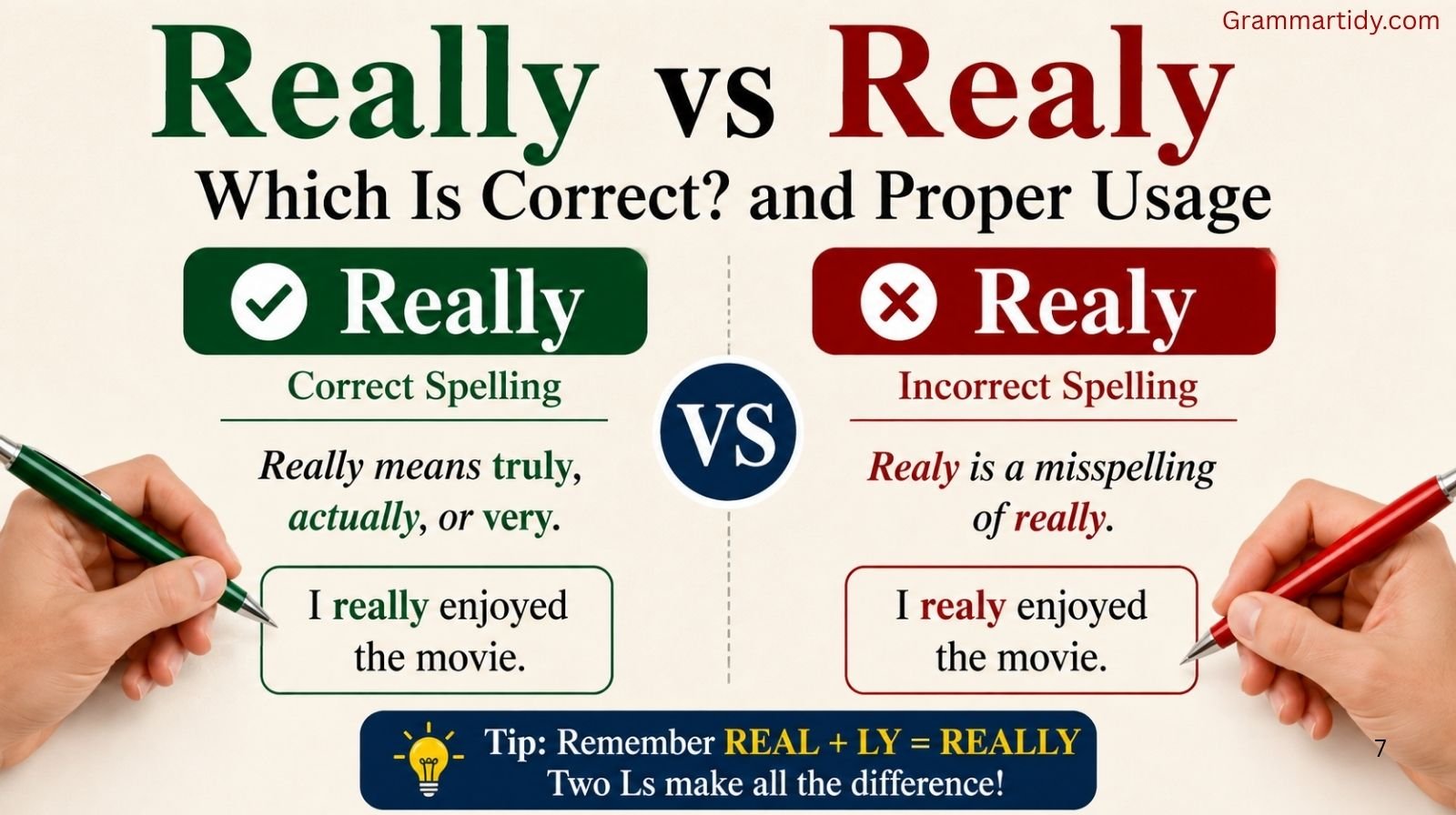
Also Read: Really vs Realy: Which Is Correct? And Proper Usage
Real-Life Case Study: How One Missing Letter Can Affect Writing
Imagine a student named Alex who is preparing an English assignment about daily routines. Alex writes, “I am puting my schoolbooks in my bag before leaving home.” The meaning is clear, but the spelling error makes the sentence less polished.
Before submitting the assignment, Alex uses a proofreading checklist to review verb forms. The checklist asks three questions: Is the base verb correct? Has the -ing ending been added properly? Does the final consonant need to be doubled?
Alex checks the verb put, recognizes that it is a short, one-syllable verb ending in a consonant after a short vowel, and corrects the sentence to: “I am putting my schoolbooks in my bag before leaving home.”
Later, Alex notices the same pattern in other words, such as sitting, running, and stopping. Instead of memorizing each spelling separately, Alex begins applying the consonant-doubling rule.
This example illustrates how understanding a spelling pattern can improve writing beyond a single word. A student who learns why putting is correct can use that knowledge when writing essays, messages, and reports.
The key lesson is that proofreading is not only about finding mistakes. It is also an opportunity to recognize patterns and build stronger spelling habits over time.
Putting Spelling Rules and English Usage in 2026
English spelling conventions remain important in 2026, whether you are writing a school assignment, updating a website, or preparing a business document. The spelling of putting has not changed: the standard form still uses two t’s.
What Do Current Spelling Standards Tell Us?
There is no need to treat putting as a new or changing spelling issue in 2026. It follows a long-established English spelling rule.
For accurate writing, you can use reputable dictionaries and established grammar references to confirm word forms and meanings. When a word appears unfamiliar, checking a dictionary is more reliable than relying on how it looks or sounds.
Useful Resources for Checking Spelling
The following resources can help you confirm English spelling and grammar conventions:
- Merriam-Webster Dictionary Check word definitions, spellings, and usage.
- Cambridge Dictionary Explore pronunciation, grammar, and example sentences.
- Purdue Online Writing Lab Review writing and grammar guidance.
These references provide general language guidance. They are useful for checking spelling rules, but they should not be interpreted as sources of a special 2026 spelling change.
Also Read: Transferred vs Transfered: Which Is Correct?
Is There Any New Data About Putting in 2025–2026?
There is no specific, verified 2025–2026 statistic established here that measures how often people misspell putting as puting. Therefore, it would be misleading to invent a percentage, search-volume figure, or error rate.
Instead, the spelling rule itself provides the most useful evidence for answering this question:
- Put is the base verb.
- Putting is its standard -ing form.
- The final consonant is doubled before adding -ing.
- Puting is not the accepted standard spelling for this meaning.
For practical writing, these facts are more helpful than an unsupported statistic because they explain both the correct answer and the reason behind it.
Frequently Asked Questions
1. Is it puting or putting?
Putting is correct. The word has two t’s because the final consonant in put is doubled before adding -ing.
2. Why does putting have two t’s?
The word follows the consonant-doubling rule. Since put is a short, one-syllable verb with a short vowel sound ending in a consonant, its -ing form is putting.
3. Is puting ever correct?
Not as the standard spelling of the English word meaning placing something or carrying out an action. Use putting instead.
4. What is the past tense of put?
The past tense is put, not putted, in ordinary standard English.
Examples:
- Present: I put my bag on the chair.
- Past: I put my bag on the chair yesterday.
- Present continuous: I am putting my bag on the chair.
5. Is putting a noun or a verb?
It can be both. In “She is putting the books away,” it is part of a verb phrase. In “Putting things away saves time,” it functions as a gerund, which acts as a noun.
6. How can I remember the correct spelling of putting?
Remember this simple formula: put + ting = putting. Think of the double t as part of the word’s correct spelling whenever you add -ing to put.
Conclusion:
The answer is simple: putting is the correct spelling in 2026. Puting is a common spelling mistake and should be avoided in standard English writing.
The reason is the consonant-doubling rule. When you add -ing to the verb put, you double the final t to create putting. This rule also appears in words such as sitting, running, and stopping.
Whether you are writing a school assignment, a professional email, a blog post, or a casual message, choosing the correct spelling makes your writing clearer and more polished.
Ready to improve your spelling? Remember the rule, check your writing before submitting it, and explore more word comparisons to build your English skills one word at a time.
Discover More Article
- Vender vs Vendor: Which Is Correct In 2026?
- Genuinity or Genuity: The Hidden Truth Behind This Confusing Word
- Anticlockwise vs Counterclockwise: Key Usage Differences Explained
- When Does Trick-or-Treating Start? Halloween Hours Guide
Keep learning with more easy grammar lessons on GrammarTidy.com

Hi, I’m Noor Fatima, the author and creator of Grammar Tidy. I’m passionate about grammar, writing, and making language learning simple and enjoyable. Through Grammar Tidy, I share helpful tips, clear explanations, and practical guidance to help readers improve their writing, avoid common mistakes, and communicate with confidence. My goal is to make better grammar easy, useful, and accessible for everyone.